
Here’s the latest in our series of entertaining interviews with a diverse array of your fellow SHA members. Meet a member for the first time or learn something about a colleague that you never knew before. This blog series also offers current members an opportunity to share their thoughts on why SHA membership is important (Camaraderie? Professional service? Exchange of ideas in conference rooms and beyond? You tell us!). If you would like to be an interviewee, please email the Membership Committee Social Media Liaisons Eleanor Breen (eabreen@mountvernon.org) or Kim Pyszka (kmpyszka@aum.edu).
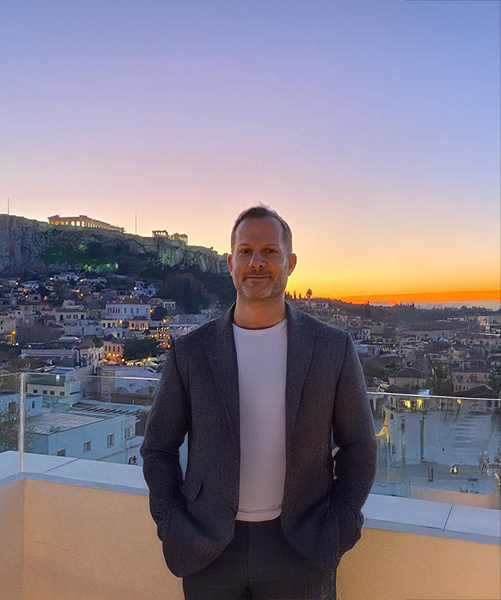
An Interview with Bryant Zeigler (zeiglerbryant768@gmail.com), a board member of the Department of Anthropology, College of Letters and Science of the University of Wisconsin. He is also a research fellow for a couple of museums including the Ruthven Museums (MI), Museum of Natural History and Planetarium (RI), just to mention a few.
Fieldwork or labwork?
As someone who has been an archaeologist for many years, I have experienced both fieldwork and labwork extensively. While both aspects of archaeology are essential and interesting, I must admit that I have always been drawn to fieldwork. There is something thrilling about being out in the field, uncovering artifacts, and getting a firsthand look at the history of a site. Additionally, I enjoy the physical aspect of fieldwork and the challenges that come with working in a new environment. That being said, labwork is also fascinating, as it involves the detailed analysis and study of artifacts, which can often reveal new insights about a site or civilization.
What would be your dream site to work at?
I have been fortunate to work on many fascinating sites over the years. However, if I had to choose a dream site to work at, it would be the ancient city of Petra in Jordan. Petra is an incredibly well-preserved Nabataean city that was carved into the rock, and it has a rich history that spans back thousands of years. I have always been fascinated by the architecture and engineering feats of the Nabataean people, and I believe that there is still much to uncover at Petra.
What are you currently reading?
I am currently reading "1491: New Revelations of the Americas Before Columbus" by Charles C. Mann. The book is a fascinating account of the pre-Columbian Americas and challenges the commonly held belief that the Americas were sparsely populated before the arrival of Europeans. It's a well-researched and thought-provoking read that challenges our understanding of history.
What did you want to be when you grew up?
As a child, I always had a fascination with history and the past. I loved visiting museums and reading books about ancient civilizations. As I got older, I realized that I wanted to pursue a career that would allow me to explore the mysteries of the past. That's what led me to become an archaeologist, and I'm grateful to be able to work in a field that I'm passionate about.
Why are you a member of SHA?
I have been a member of the Society for Historical Archaeology (SHA) for many years. I believe that it is essential to be a part of a community of like-minded individuals who are passionate about archaeology and history. The SHA provides opportunities for networking, learning, and sharing ideas, which are invaluable to an archaeologist. Additionally, the organization helps to promote the field of historical archaeology and educate the public about its importance. I am proud to be a member of the SHA and to support its mission.
At what point in your career did you first join SHA?
I first joined the Society for Historical Archaeology while I was in graduate school. I was looking for opportunities to network with professionals in the field and to learn more about historical archaeology beyond the confines of my academic program. Joining SHA was a great decision, as it has provided me with countless opportunities to connect with colleagues, share research, and attend conferences and workshops.
How many years have you been a member (approximately)?
I have been a member of the Society for Historical Archaeology for about 16 years now. It's been a great organization to be a part of and has been instrumental in my professional development as an archaeologist.
Which article from Historical Archaeology has been the most influential to you?
There have been many influential articles published in Historical Archaeology over the years, but one that stands out to me is "The Archaeology of African American Slavery and Material Culture" by Theresa Singleton. This article presented a new perspective on the material culture of African American slavery and challenged traditional views on the subject. It's a thought-provoking article that has had a lasting impact on my work as an archaeologist.
Which benefit of belonging to SHA do you find the most beneficial?
The benefit of belonging to the Society for Historical Archaeology that I find most beneficial is access to the organization's publications. Historical Archaeology is a leading journal in the field, and the articles and book reviews it publishes are always informative and thought-provoking. Additionally, being a member of SHA gives me access to the organization's other publications, such as the SHA Newsletter, which provides updates on the latest research, events, and other news in the field. Access to these publications has been instrumental in keeping me informed and engaged in the field of historical archaeology.